Something to try this week
Counselling psychologist Based out of India, currently residing in Dubai, UAE
Room to breathe, and someone who listens.
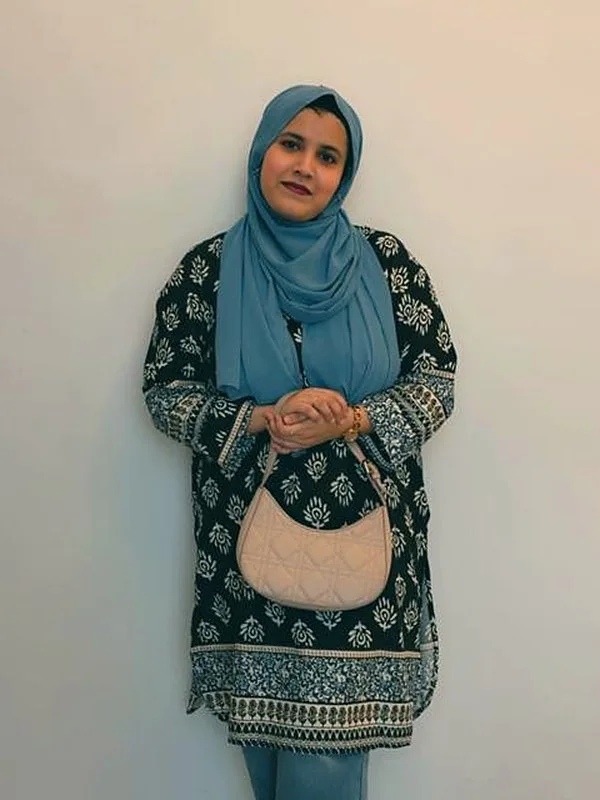
I'm Nadiya Qudsi, a counselling psychologist based out of India, currently residing in Dubai, UAE. I work with teenagers, young adults and parents across the UAE and India who are carrying more than they can hold right now.
Who I work with
Most people I see aren't in crisis. They're tired of feeling stuck and want someone outside the situation to think it through with.
-
Teenagers
Exam pressure, friendships, mood swings, screens, and the feeling that nobody really gets it.
What we often work on
-
Young adults
Stress, anxiety, low mood, relationships, career confusion, or starting over in a new city or country.
What we often work on
-
Parents
You're worried about your child's mood or behaviour and don't know what to say. We work out the next step together.
What we often work on
Find your starting point
Two quick choices, and you'll see what working together could look like. This isn't a test or a diagnosis.
How it works
-
A free 15-minute call
Pick a time that suits you. We talk about what you need and whether I'm the right person to help. There's no pressure to continue.
-
A 60-minute discovery session
Our first full session, and it's paid. Once you book, you'll get a payment link by email, and the session is confirmed when it's paid.
-
Regular sessions
Video sessions, usually once a week. We set goals together and check in on them as we go.
Stories like the ones I hear
These are examples, not real clients. What people share with me stays private, so these sketches are made up to show what the first few sessions can look like.
-
Grade 11 student
“I know the answers, then I sit down and my mind goes blank.”
Mock exams are a month away. Sleep has gone, and every evening ends in tears over the same chapter.
- First session
- We map when the panic shows up and what the body does in that moment. No lecture about studying harder.
- Next few weeks
- A two-minute breathing reset for the exam hall, a study plan with real breaks, and catching the “I’m going to fail” thought before it snowballs.
-
A parent
“My son used to tell me everything. Now it's one-word answers and a closed door.”
A 14-year-old has gone quiet since moving schools. Every question at dinner turns into an argument.
- First session
- Just the parent. We look at what has changed, what is normal for his age, and what is worth watching.
- Next few weeks
- Small changes at home: fewer questions, more side-by-side time. If he's willing, a separate session for him, on his terms.
-
Young adult, new to Dubai
“Everyone back home thinks I'm living the dream. I just feel alone.”
Eight months into a first job abroad. Long hours, no close friends yet, and guilt about not feeling grateful enough.
- First session
- Room to say it out loud without being told to cheer up. We name what is being missed, and what is still in their control.
- Next few weeks
- Gently rebuilding a routine, one or two small ways to meet people, and handling the weekly call home without pretending.
Your story will be your own. If any of this sounds familiar, write to me.
Profile
From school counselling rooms in Delhi to families across the UAE and India, Nadiya Qudsi has worked since 2021 to help young people feel safe enough to be honest.

People start to feel better when they feel safe enough to be honest.
I've worked with young people since 2021: in school counselling rooms in Delhi and Jaunpur, at a government child shelter home in New Delhi, and on clinical placements in hospitals and therapy centres.
Over 200 sessions later, the thing I trust most is simple. My work is client-centred and draws on CBT and trauma-informed practice, and we go at a pace that feels right for you.
I've also run wellbeing workshops for more than 80 children and trained care staff on supporting children's mental health day to day.
I'm from India and currently live in Dubai. Having made that move myself, I understand how much a new country, a new school or distance from family can weigh on people.
Reads
Things I explain often, written down. Each takes about three minutes.
For parents
Is my teenager okay?
Teenagers are meant to pull away a little. What's worth noticing is change: when your child is different from their usual self for more than a couple of weeks.
Getting started
What happens in a first session
What we talk about, what you don't have to share, and how to know if it's working.
Try this
A one-minute breath for anxious moments
Why a longer out-breath calms the body, and how to practise it.
Questions people ask
Is what I say kept private?
Yes. What you share stays between us. The only exceptions are if I believe you or someone else is at serious risk of harm, or a child is unsafe. If that ever comes up, I'll talk it through with you first wherever I can.
What do I need for an online session?
A private room, a phone or laptop with a camera, and a steady internet connection. Headphones help. Some people take sessions from a parked car, and that's fine too.
How much does a session cost?
The 15-minute intro call is free. The discovery session and regular sessions are paid. After you book, you'll get a payment link by email showing the fee, and your session is confirmed once it's paid. You're welcome to ask about fees on the free call.
Can you prescribe medication?
No. Psychologists don't prescribe. If I think medication might help, I'll explain why and suggest you see a psychiatrist. We can keep working together alongside that.
Where are your clients based?
I'm based out of India and currently residing in Dubai, UAE, and I work with clients across the UAE and India. Sessions are online by video, so we can meet wherever you are, at a time that works in your time zone.
Can I come with my child, or only my child?
Both work. With younger children I usually start by meeting a parent. With teenagers, we agree together how much is shared with parents, so they can trust the space.
Book a time
Pick a slot that suits you. All sessions are online video calls. Not sure where to begin? Start with the free call.
Booking opens Cal.com in a new tab. Rather write first? Send me a message.
Start with a message.
Rather write first? Tell me a little about what's going on and I'll reply by email. You can also book a time straight away.
Only I read these messages.
Prefer email? Write to qnadiya@gmail.com
Thank you. Your message is with me.
I'll reply by email to set up a time for your free call.